

10 Reasons to Get a Professional Pool Screen Inspection
A damaged pool screen can quickly turn your outdoor space from relaxing to stressful. But in Florida, the stakes are higher than just bugs. A weak pool cage can fail catastrophically during a storm if structural issues are left unchecked.
Florida weather tests every inch of your enclosure year-round. Salt air corrodes your screws and UV rays turn your screen brittle. Invisible damage builds up over time. Knowing where to find trusted pool screen repair near you helps protect your home, your time, and your investment.
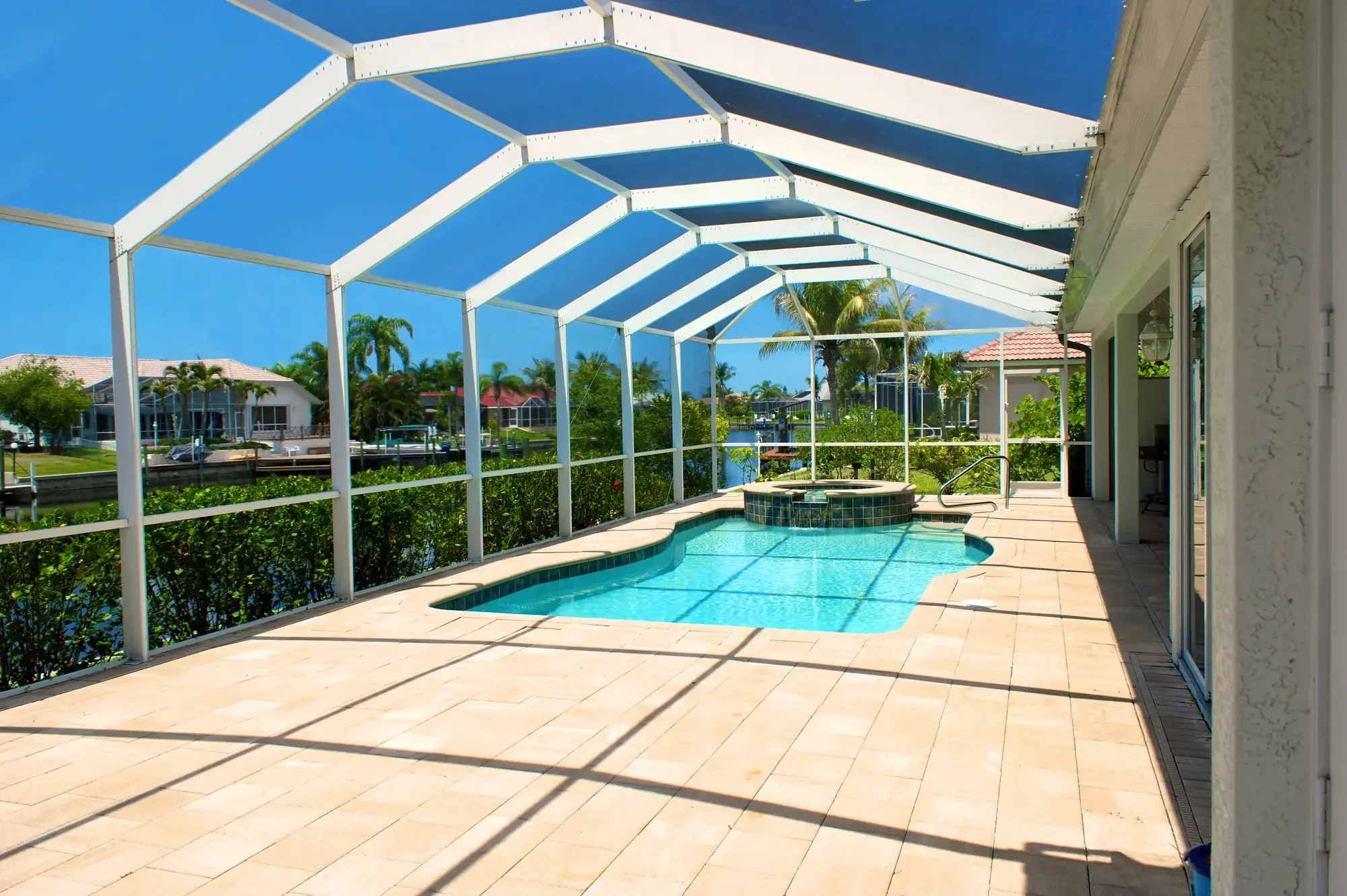
1. The Hidden Danger: Rusted Anchors (Tapcons)
The #1 reason pool cages collapse is not the wind. It is the anchors.
For years, builders used standard steel screws to bolt the aluminum cage to your concrete deck. In Florida's salt air, these rust from the inside out. A professional inspection involves checking these Tapcons. If the heads of these screws are rusted off, your cage is essentially resting on the deck by gravity alone.
A pro can replace these with Nylo-Tec or Stainless Steel fasteners. This ensures your cage stays grounded when high winds hit.
2. Brittle Screen: The "White Test"
Does your screen look silver or white instead of black? That is a sign that the UV coating has completely worn off.
When screen mesh turns white, it becomes as brittle as paper. A strong gust will not just tear it; it will disintegrate it. A professional can perform a burst strength test to determine if you need a simple repair or a Full Rescreen.
3. Repair vs. Full Rescreen: Making the Right Choice
One of the main reasons to hire a pro is to get an honest assessment of whether you need a patch or a full replacement.
Spot Repair: Best for accidental tears (dog claws, golf balls) on screens that are less than 5 years old.
Full Rescreen: Necessary when the screen is over 10 years old. If you try to patch old screen, the new spline puts tension on the old material. This causes it to rip right next to the repair.
A pro can save you money by telling you the truth. Spending $200 on patches for a 15-year-old cage is throwing money away. It is often better to invest in a full restoration.
4. Upgrade to "Hurricane Strong" Materials
An inspection is the perfect time to upgrade your defenses against future storms. Standard "Builder Grade" mesh is fine for bugs, but it is weak against debris.
During your inspection, ask a pro about two specific upgrades:
Polyester "Super Screen": This material is 3x strong than fiberglass. It is designed to withstand golf balls, large dogs, and flying storm debris.
20/20 No-See-Um Mesh: A tighter weave that adds wind resistance and blocks tiny biting midges.
5. Safety & Insurance Documentation
Did you know that insurance claims for pool cages are frequently denied due to "wear and tear"?
If a storm destroys your cage, the insurance adjuster will look for rust. If they find pre-existing corrosion, they may deny your claim. They will argue that the cage failed because of rust rather than wind.
Having a recent professional inspection report documents the condition of your cage. If you have proof that you maintained the structure, you have a much stronger case if you ever need to file a claim.
6. The "Door & Latch" Check
It seems minor, but a flying screen door can be a missile during a storm.
Over time, the pneumatic closers (the tubes that shut the door) lose pressure. The hinges can also rust shut. A professional inspection ensures that:
The door latches securely.
The bug sweeps are intact (keeping snakes and rats out).
The hinges are replaced with stainless steel to prevent seizing.
7. Preventing "Green Screen" (Mold & Algae)
In Florida's humidity, algae loves to grow on screen mesh. This "green fuzz" does more than look ugly; it actually eats away at the UV coating of the mesh, shortening its lifespan by years.
A professional can identify if your screen needs a Soft Wash or if the algae has already compromised the structural integrity of the fiber. Cleaning it the wrong way (with high-pressure water) can shred the screen, so expert advice here is critical.
8. Structural Integrity (The Super Gutter)
The "Super Gutter" is the heavy aluminum channel that connects your pool cage to your house roof. It is the single most important structural component.
If the Super Gutter is clogged or pulling away from the fascia, water can rot the wood of your home's truss system. A pool screen pro will inspect this connection to ensure your cage isn't slowly pulling your roof apart—a repair that costs thousands if ignored.
9. Curb Appeal & Resale Value
A pool cage with rusty screws and sagging panels makes the entire house look neglected. If you are planning to sell your home, a "Tune-Up" inspection is the highest ROI investment you can make.
For a fraction of the cost of a new cage, a pro can replace the rusty screws (which leave ugly orange streaks on white cages) and tighten the panels. This makes the enclosure look brand new for listing photos.
10. Avoid the "DIY" Trap
Pool screen repair looks easy on YouTube, but it is dangerous and technically difficult.
The Risk: Walking on the "Super Gutter" or aluminum beams to reach roof panels is a major fall hazard. Professionals carry liability insurance and use proper scaffolding or walking planks.
The Quality: Incorrectly rolling the spline can warp the aluminum groove. This permanently damages the expensive frame.
Do not risk injury or structural damage. Let a pro handle the high work.
Frequently Asked Questions
-
Many pros in our network offer free or low-cost estimates if you are considering repairs. A detailed "Safety Inspection" (checking anchors and cables) may have a service fee. This fee is often credited toward any work you have done.
-
We strongly advise against it, especially for roof panels. Without proper equipment, walking on a pool cage beam is incredibly dangerous. Furthermore, improper spline installation can bend the aluminum frame. This makes future professional repairs more expensive.
-
We recommend a professional inspection once a year, ideally in the cooler months (January–April). This ensures any loose cables or rusted fasteners are fixed before the summer storm season begins.
-
Yes. Reputable professionals typically offer a warranty on labor (often 1–3 years) and pass along the manufacturer's warranty on the mesh. Phifer and Twitchell often offer 10-year warranties on materials. Always ask to see the warranty in writing.